
Why Do I Feel Guilty When I Set Boundaries? (And How to Set Them Without the Guilt)

If setting boundaries makes you feel guilty, you are honestly in very common company.
A lot of high-achieving, responsible, emotionally aware women I work with say some version of this:
“I know I need boundaries, but I feel like a bad person when I set them.”
“I end up over-explaining or backing down.”
“I feel anxious after I say no, even when I really mean it.”
And what I always want people to know is this: guilt around boundaries is not a sign you’re doing something wrong. It’s often a sign that your nervous system is learning a new pattern after years of not standing up for yourself.
Because for many people, especially those with anxiety, perfectionism, people-pleasing tendencies, or trauma histories, boundaries were never modeled as something safe, neutral, or emotionally okay.
So of course it feels uncomfortable at first.
Why Boundaries Can Feel So Hard
On a surface level, boundaries are simple. They’re just limits around your time, energy, emotional capacity, and availability. But emotionally, boundaries often activate much deeper systems in us.
For many people, especially those who grew up in environments where love, approval, or safety felt conditional, setting a boundary can unconsciously feel like risking connection.
Even something as small as saying “I can’t make it” or “That doesn’t work for me” can bring up an internal response that feels bigger than the situation.
The moment you say it, you start feeling riddled with guilt and anxiety.
And underneath that guilt is often a fear that you will disappoint someone, be misunderstood, or be seen as selfish, difficult, or unkind.
This is especially common for people with anxious attachment patterns or strong people-pleasing conditioning. The nervous system learns early that keeping others comfortable equals staying connected and safe.
So when you begin setting boundaries, even healthy ones, your system may interpret it as a threat at first.
Not because it actually is one, but because it’s unfamiliar.
What Boundary Guilt Actually Is Trying to Do
It helps to understand guilt here as a signal rather than a verdict.
Boundary guilt is often your internal system trying to pull you back into old patterns of maintaining harmony at your own expense.
It can sound like:
“You’re being too much.”
“They’re going to be upset with you.”
“You should just make it easier.”
“You’re selfish for needing this.”
But those thoughts are usually not reflective of reality. They’re often protective strategies that used to help you maintain relationships or avoid conflict.
In other words, guilt is not always truth telling. Sometimes it is conditioning.
When we treat guilt as truth, we tend to abandon ourselves. When we recognize it as a learned response, we can start to respond differently, especially with the help of a therapist.
Why Boundaries Feel Worse Before They Feel Better
One of the most surprising things for many clients is that boundaries often feel worse before they feel better.
This is something I normalize a lot in therapy.
When you start setting boundaries consistently, especially in relationships where you previously overextended yourself, there is often an adjustment period.
Your nervous system is learning:
“I can take up space and still be okay.”
“I can say no and still be connected.”
“I don’t have to over-function to be valued.”
But that learning doesn’t happen instantly.
So early boundary-setting can feel emotionally loud. You might feel guilty after conversations, replay them in your mind, or feel tempted to go back and over-explain. This is totally normal, and the more practice you get the easier it becomes.
What Healthy Boundaries Actually Look Like in Real Life
A lot of people think boundaries need to be firm, perfect, or highly scripted in order to be valid. That’s not always true.
Healthy boundaries are usually calm, simple, and not overly defended.
For example, instead of over-explaining why you can’t do something, a boundary might sound like:
“I won’t be able to make it this time.”
“That doesn’t work for me, but I hope it goes well.”
“I’m not available for that, but thank you for thinking of me.”
You don’t need to justify your capacity to the point of exhaustion.
And you also don’t need to earn your boundary by being perfectly composed or unbothered when you say it.
Feeling nervous or guilty while setting a boundary does not invalidate it.
Why Guilt Doesn’t Mean You’re Doing Something Wrong
One of the biggest shifts that happens in therapy is learning that discomfort is not the same as danger.
Guilt can feel like something is wrong, but often it’s just unfamiliar emotional territory.
Especially for people who are used to being the reliable one, the easy one, the one who keeps things smooth, boundaries can feel like a disruption of identity at first.
That can feel disorienting.
But it is also where change begins.
Because every time you set a boundary and don’t abandon yourself in response to the guilt, you’re teaching your nervous system something new.
You are showing it:
“I can be honest and still be safe.”
“I can choose myself and still stay connected.”
“I don’t have to over-give to be valued.”
How Therapy Helps With Boundary Guilt
Boundary work is rarely just about communication skills.
More often, it’s about nervous system patterns, attachment dynamics, and deeply learned beliefs about worth and responsibility.
In therapy, we often explore:
Why saying no feels unsafe.
Why over-explaining feels necessary.
Why conflict feels intolerable.
Why other people’s discomfort feels like your responsibility.
And over time, those patterns can shift.
Therapy helps you practice new responses in real time, not just intellectually understand boundaries, but actually feel what it is like to hold them without immediately collapsing into guilt or over-correction.
For many clients, especially high-functioning women, this becomes one of the most relieving parts of the process.
Because it stops being about “how do I say this perfectly” and starts becoming “how do I stay connected to myself while I say this honestly.”
You Don’t Have to Cope with Boundary Guilt By Yourself
If setting boundaries feels emotionally intense, uncomfortable, or guilt-heavy for you, that is something that can change over time with the right support.
It doesn’t require becoming a different person. It usually involves learning how to relate to your own emotions differently and unlearning patterns that once helped you cope but are now keeping you stuck.
That process is very possible in therapy.
I work with women and couples throughout Virginia Beach, Norfolk, and surrounding areas who are working through boundary patterns, anxiety, perfectionism, and relationship stress, both in weekly therapy and in deeper therapy intensive work when appropriate.
Looking for Therapy Support in Virginia?
If you are noticing that boundary-setting brings up anxiety, guilt, or overthinking that feels hard to move through on your own, therapy can help you understand what’s underneath those reactions and build more confidence in your relationships and decisions. Contact us today to get started.
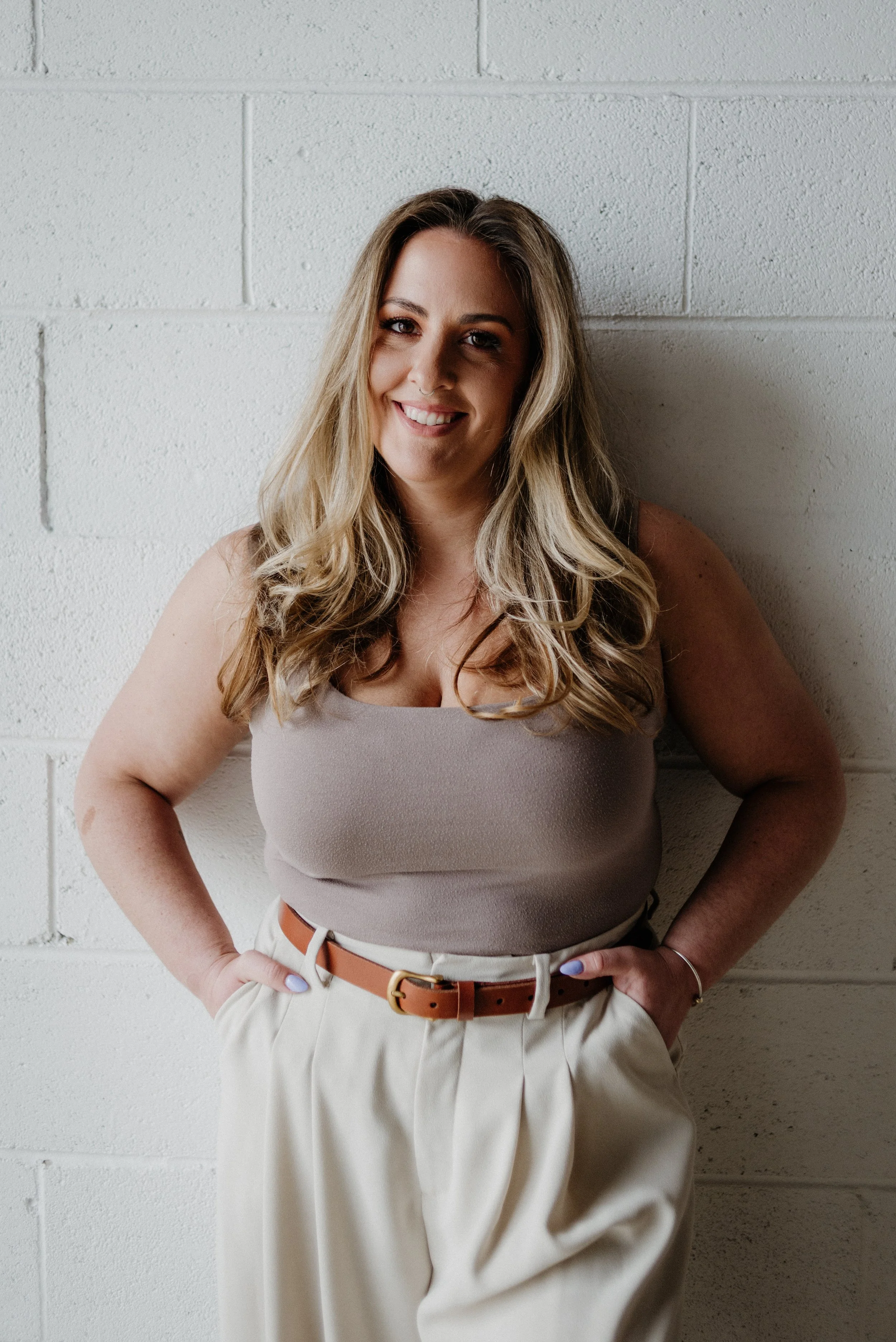
Margaux Flood, LCSW, is a licensed therapist with over a decade of experience supporting clients in Virginia, Florida and South Carolina. She specializes in couples therapy, women’s mental health, anxiety, and self-esteem, using evidence-based approaches like Trauma-Focused Cognitive Behavioral Therapy (TF-CBT), mindfulness-based techniques, and attachment-focused interventions to help clients strengthen connection, build confidence, and feel more grounded in themselves and their relationships. Margaux Flood, LCSW is committed to providing compassionate, expert virtual care for clients across Virginia, Florida and South Carolina. Her team also provides individual psychotherapy services across the states of Mississippi and Missouri.