
People-Pleasing and Self-Abandonment: When Keeping the Peace Means Losing Yourself

We live in a world that absolutely loves a people-pleaser. From the time we are young, we are praised for being the "easy child," the ultra-accommodating friend, the coworker who never says no, and the partner who seamlessly anticipates everyone else's needs. On the outside, it looks like ultimate kindness.
But on the inside? It often feels like an entirely different story.
Internally, constantly managing everyone else's emotional comfort is exhausting. It means running on an endless treadmill of checking in, overextending yourself, and keeping your true thoughts locked away because you are terrified of disappointing someone. You become a master at smoothing things over for others, while a quiet, heavy storm of anxiety and resentment brews inside you.
Eventually, this constant focus on keeping the peace leads to a painful pattern of self-abandonment. You become so practiced at looking outward to see what everyone else needs that you completely lose touch with what you need, what you think, and who you actually are.
If you are a woman in your 20s, 30s, or 40s who is completely running on empty from trying to hold it all together, I want you to take a deep breath. You are not weak, not failing, and you are definitely not alone. Let’s unpack why this happens and how you can safely start choosing yourself again.
How People-Pleasing Develops: It’s a Survival Strategy, Not a Character Flaw
When you struggle with a deep fear of disappointing people, it is incredibly easy to beat yourself up. You might wonder, “Why can’t I just speak up for myself?” or blame yourself for having low self-esteem.
But here is the truth that every high-achieving woman needs to hear: people-pleasing is not a sign of weakness or manipulation. It is a protective nervous system response.
More often than not, this behavior develops early in life as a survival strategy. It is deeply connected to attachment wounds, early childhood dynamics, or a history of trauma. If you grew up in an environment where emotional safety was conditional: meaning you were only safe, praised, or loved when you were performing, achieving, or keeping the adults around you happy, your brain took notes.
When a child’s environment is unpredictable, chaotic, or emotionally distant, the developing nervous system adapts. It learns that the best way to avoid conflict, rejection, or abandonment is to become hyper-vigilant. You learn to read the room, scan faces, and morph yourself into whatever version of "you" keeps the peace.
In psychology, we often refer to this as the "fawn" response: a trauma response where your body defaults to appeasing others to neutralize a threat. Over time, this survival mechanism gets hardwired into your brain. Your adult nervous system genuinely believes that setting a boundary or saying "no" will result in catastrophic loss or danger. You aren't just trying to be nice; your body is trying to keep you safe.
What Self-Abandonment Looks Like in Daily Life
The natural byproduct of chronic people-pleasing is self-abandonment. This happens when you consistently value the desires, opinions, and expectations of others above your own internal truth.
Because young professional and ambitious women are so used to over-functioning, self-abandonment rarely looks like a dramatic meltdown. Instead, it sneaks into your daily routine in subtle, draining ways:
The Automatic "Yes": Agreeing to take on another project at work, host another family event, or go to a social gathering you have zero energy for, before you’ve even had a chance to think about it.
Chameleoning Your Opinions: Suppressing your true thoughts, beliefs, or preferences in a conversation just to avoid making waves or causing a disagreement.
Minimizing Your Emotional Reality: Telling yourself, "It's fine, it's not a big deal," or "I'm just being too sensitive," when someone hurts your feelings or violates your space.
The Resentment Burnout: Feeling a deep, boiling resentment toward the people in your life because you are doing so much for them, yet feeling entirely unseen and unsupported yourself.
Losing Your Internal Compass: Realizing that if someone asked you what your hobbies, core values, or favorite things are separate from your job or your relationships, you wouldn’t honestly know the answer.
Beyond Surface-Level Communication Tips: How Therapy Helps You Heal
When you Google how to stop people-pleasing, you often find generic advice telling you to "just practice saying no" or "set clearer boundaries." But if your nervous system perceives boundary setting as fundamentally unsafe, those surface-level tips will only make you feel more anxious.
True, lasting healing requires going deeper. It requires a therapeutic approach that addresses both your mind and your body. Specialized therapy support offers a safe space to untangle these lifelong patterns without judgment. Here is how we actually do the work:
⚙️ Nervous System Regulation
Because your people-pleasing is hardwired as a protective physical response, we have to start with the body. In therapy, you learn somatic and mindfulness tools to calm your anxiety in real-time. We train your nervous system to understand that you can tolerate the temporary discomfort of someone being disappointed in you without your body going into a full-blown "fight, flight, or fawn" panic.
🛑 Safe Boundary Setting
We move away from rigid scripts and instead build customized, authentic boundaries that fit your actual life. We practice taking micro-steps (setting small, low-stakes boundaries first) so you can build evidence that the world won't collapse when you honor your own limits.
💖 Reconnecting with Self-Trust and Values
When you stop self-abandoning, a beautiful thing happens: you clear out the noise of everyone else’s expectations and make room for your own voice. Therapy helps you dust off your core values, identity, and personal needs. You learn to check in with yourself first before responding to the world around you, cultivating a deep sense of self-trust.
Your Needs Deserve a Place at the Table
You have spent years being the rock and the caregiver for everyone else. You have proven over and over again that you can handle the weight of other people's expectations. But you were not put on this earth simply to be useful, accommodating, or agreeable to everyone around you at the expense of your own spirit.
You are allowed to take up space in your own life.
If you are feeling completely exhausted from constantly prioritizing others, please know that you do not have to figure out how to untangle this cycle all by yourself. Whether you are navigating the fast-paced professional pressures of Northern Virginia, managing a family and career in Richmond, or looking for a trusted space right here in Virginia Beach, we are here to help.
I invite you to take the very first step toward choosing yourself today. Contact us and let's explore how tailored therapy support can help you drop the weight of perfectionism, build authentic boundaries, and step into a life where you finally feel safe to rise.
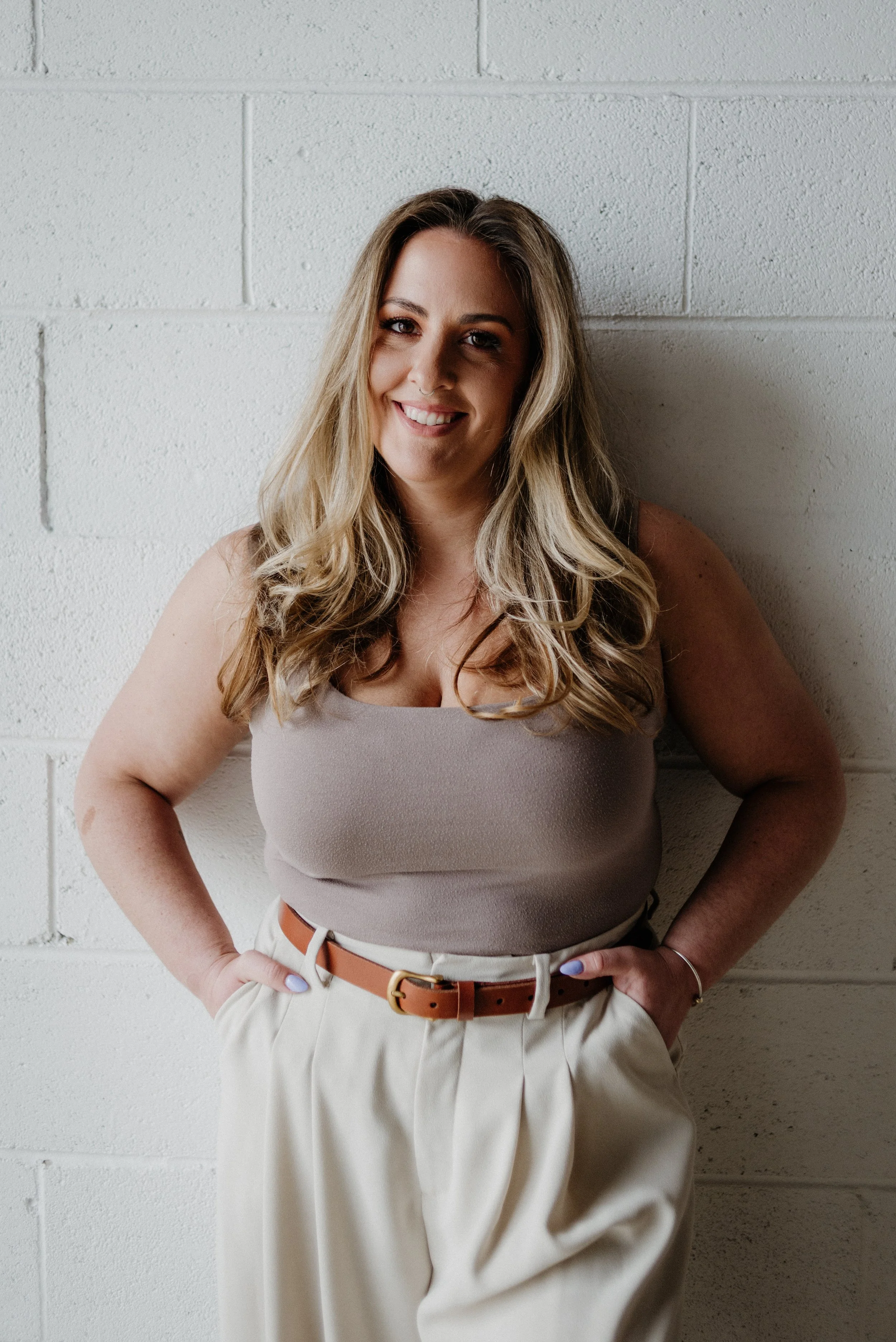
Margaux Flood, LCSW, is a Licensed Clinical Social Worker and psychotherapist with over a decade of experience supporting clients in Virginia, Florida and South Carolina. She specializes in couples therapy, women’s mental health, anxiety, and self-esteem, using evidence-based approaches like Trauma-Focused Cognitive Behavioral Therapy (TF-CBT), mindfulness-based techniques, and attachment-focused interventions to help clients strengthen connection, build confidence, and feel more grounded in themselves and their relationships. Margaux Flood, LCSW is committed to providing compassionate, expert virtual care for clients across Virginia, Florida and South Carolina. Her team also provides psychotherapy services across the states of Mississippi and Missouri.
Disclaimer: The information in this article is for educational purposes only and does not substitute for professional therapy or medical advice.